I did not choose to become disabled. Like many disabled people, I worked for most of my life, contributed to my community, and continued to volunteer even when my health made paid work impossible.
What I did not expect was that, on top of managing the daily realities of disability, I would also have to navigate a rising tide of misinformation, suspicion, and hostility directed at people like me.
In recent years, public discourse around disability has shifted in a deeply troubling direction. Politicians, commentators, and sections of the media have amplified misleading narratives about disabled people, particularly those who rely on the Motability scheme.
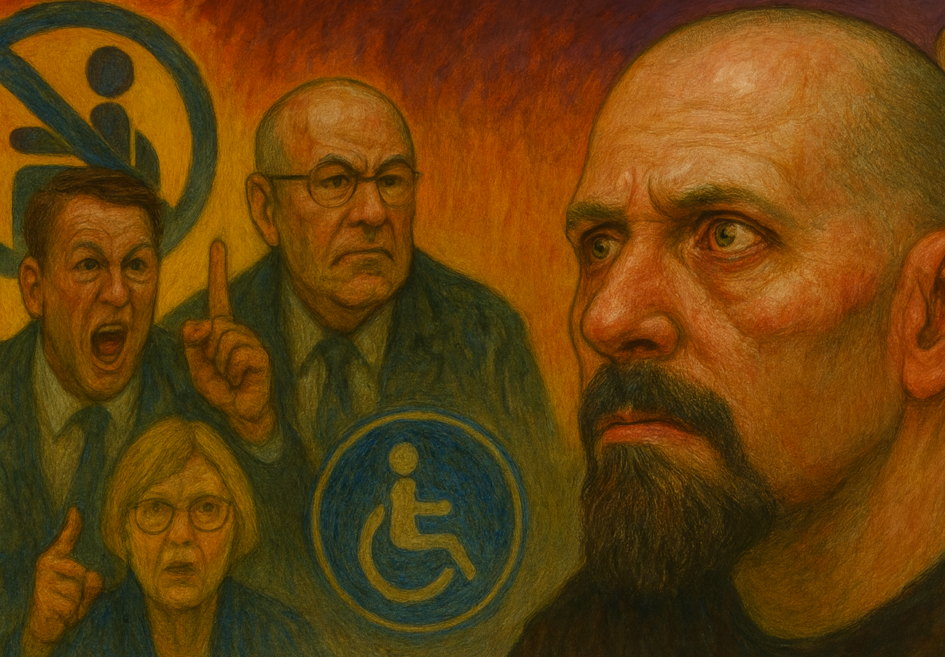
These narratives are not harmless misunderstandings — they fuel resentment, distort public perception, and create an environment where disabled people are treated as burdens, frauds, or targets for ridicule.
I have seen this play out online, where hateful comments spread quickly and confidently. I have overheard it in public spaces, where strangers repeat misinformation as if it were fact. And now, I am experiencing it directly, face to face.
Recently, a man I know well remarked that I would “be due a new car soon,” referring to my Motability vehicle. Before I could respond, his friend added, “I pay for that car as well as my own.” He went on to suggest that if disabled people were still given the old blue plastic mobility cars, “most wouldn’t bother,” implying that disability is a choice and support is a luxury.
In that moment, I was stunned — not because the comments were new, but because they were spoken with such certainty. I told him plainly that I would use whatever support was available, because I am not ashamed of being disabled, and I am grateful for the help that allows me to live with dignity. I also told them that they had clearly absorbed political and media propaganda without ever seeking the truth.
I left the conversation knowing that you cannot argue someone out of a prejudice they are determined to keep. But the encounter stayed with me, because it reflects a wider problem: disabled people are increasingly subjected to hate speech, yet we are not consistently protected in the same way other groups are.
Disability is a protected characteristic, yet the enforcement of those protections often feels absent when we need them most.
The people who spread misinformation — whether in Parliament, on television, or on social media — must be held accountable for the harm they cause. Their words shape public attitudes, and those attitudes shape the experiences of disabled people in everyday life. When hate is normalised at the top, it trickles down quickly.
Coming to terms with disability is already a difficult and emotional journey. We should not also have to endure suspicion, shaming, or hostility from our government, our media, or the public. Disabled people deserve respect, truth, and protection — not judgement based on myths and political narratives.
I will continue to speak up, not because it is easy, but because silence only benefits those who spread hate. My story is just one example, but it reflects a reality faced by many. We deserve better, and it is time for society to recognise the harm being done — and to stand with disabled people rather than against us.